

The Group's general aim is to further the study of late fifteenth-century history and in particular the reign and reputation of Richard III.
At our November meeting, Kim H explained that whilst late medieval poetry is a little tricky, it’s manageable in ‘small bites’ and with Google for any tricky word (‘brast’? ‘shent’?). In the late C15th, poetry was still used for moral and religious education, promoting Christian virtues in both commoner and prince; it also preserved heroic ideals and created a sense of collective national identity when detailing the history of England and its monarchs. Poems could be personal – eg. Anthony Woodville’s lament in prison or Henry VI’s poem on political precarity – but often dealt with the wider political fray, as propaganda pieces, or like an “op ed”, could voice dissent against the status quo. The French chivalric tradition of the troubadours was not quite over, and some poems explored honour, courtly love and the follies of human behaviour. Poems would mostly be encountered in performance by minstrels, with refrains, rhymes or repeated phrases used to help the speaker. Kim then introduced several poems written from the 1460s-90s. [The following is a concise list of the poems, which were covered in greater detail.]
Poem by Henry VI: in captivity, Henry VI reflects on the state of his kingdom, the traps of the crown, and the dangers of ruling.
1462 political poem against Margaret of Anjou: some Yorkist political propaganda focused on Margaret's female sex to show the transgressive nature of Lancastrian sovereignty.
`In the yere of oure lorde' (1483): this 1520s/30s prophetic poem, speaks of a hero called `trew R', who will crown a king called `E',
The year of our Lord 1483, in this way,/‘Tween the departing of April and not far from May
The bull shall depart and pass away/The same year shall be much ado
Wales shall bear arms and to Albion go/Which shall cause men to suffer much woe
The Cheshire Prophet, Robert Nixon: this short prophecy extends the idea, implicit in the prophecy above, that Richard embodies the public virtues of his father, Richard Duke of York and suggests the need for a protector for both the young king and for the realm, just as Richard's father had been in the 1450s.
“Then rise up, Richard, son of Richard,/And bless the happy reign.
Thrice happy he who sees this time to come,/When England shall know rest and peace again.”
On the Recovery of the Throne of England by Edward IV: As the 18-year-old Richard led the vanguard at Barnet, he was compared in this poem to Hector, the famous prince of Troy, the ultimate defender of greatest courage and martial skill.
‘The Duke of Gloucester, that noble prince,/ young of age, victorious in battle,
To the honour of Hector that he might come,
Grace him followeth, fortune and good speed./I suppose he is the same that clerks of read,
Fortune hath him chosen and forth with him will go./ Her husband to be, the will of God is so
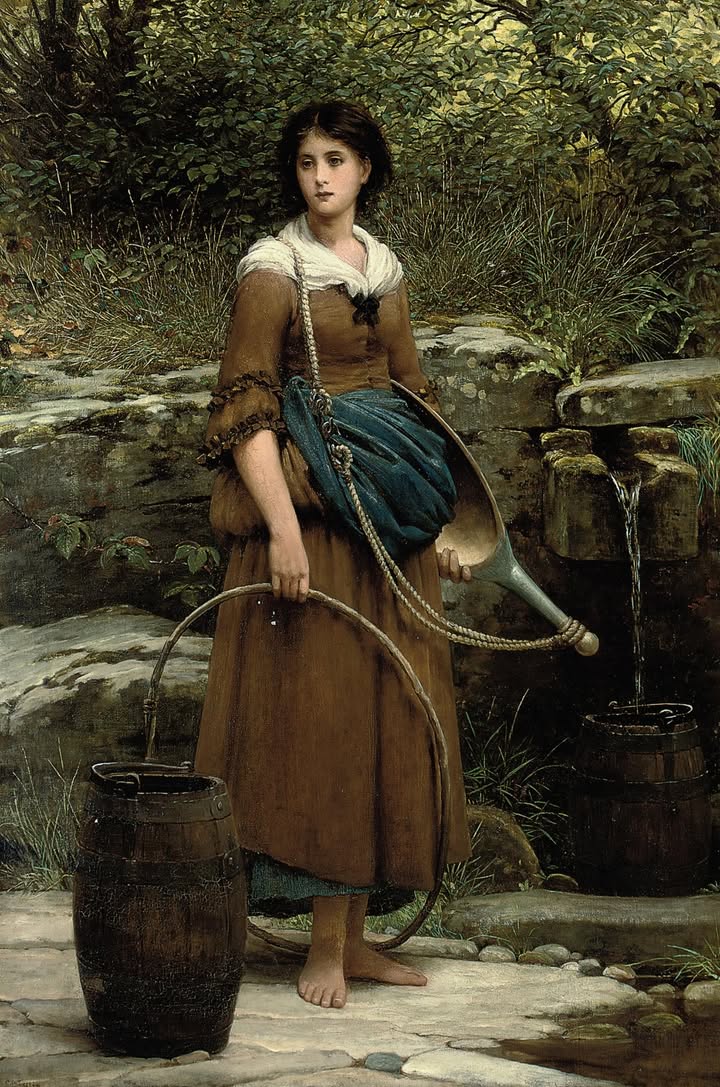
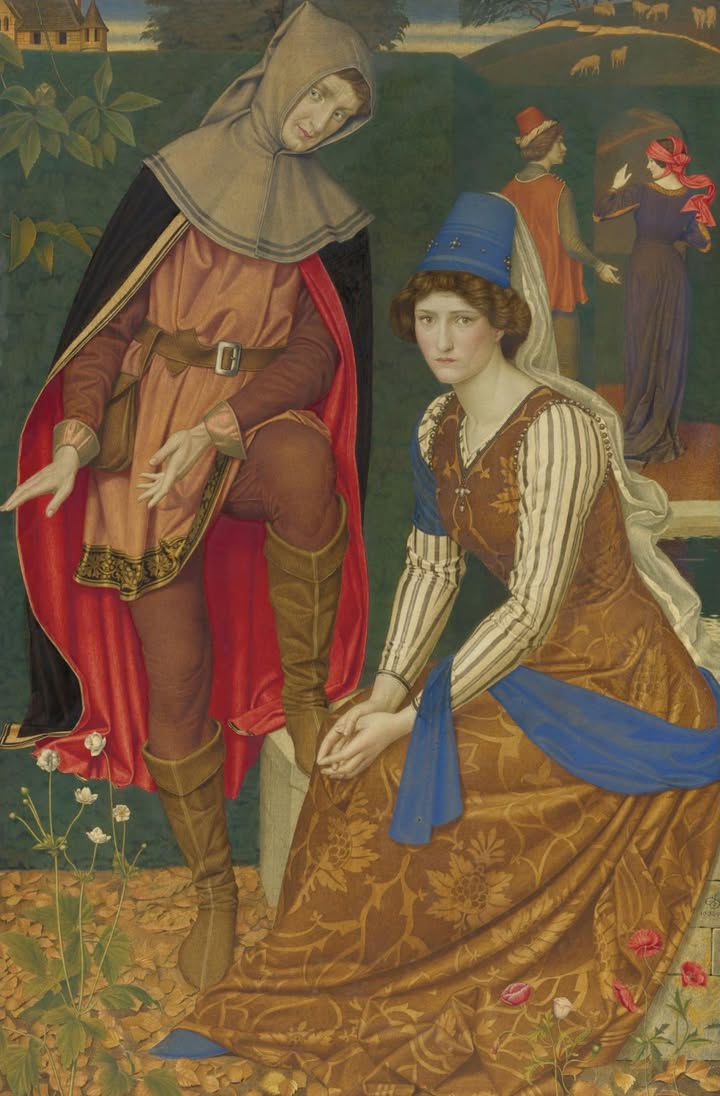
The Nut-Brown Maid: This ballad may have been based on the exploits of Henry 10th Baron Clifford (1454-1523) and his wife Anne St John, and may have been written by a woman. Famously, it was used in the well-known Ricardian fiction novel, “We Speak No Treason”, as chapter headings for The Nun’s Story. In the ballad a maid’s love is banished as an outlaw and she determines to follow him to the greenwood, come wind, weather, lack of food or bed, risking reputation, danger and abandonment. She persists that she “loves but him alone”, and her lover admits he isn’t really an outlaw but an Earl’s son and proposes marriage!
Edward IV and the Tanner of Tamworth: In this poem, Edward IV amuses himself at the expense of a local man whom he meets whilst out hunting with his courtiers. The man is blissfully unaware he is chatting with a king and not only misleads Edward with directions but is extremely impolite to him, suspecting him of being a thief! He conducts a sneaky deal, swapping his horse for the king’s but comes undone when his cow-hide saddle freaks out the royal horse and he ends up in the mud. Fortunately, Edward is amused and rewards him handsomely with an esquire’s collar and a fine estate of land! The tanner tells Edward that if he should ever visit his little shop in Tamworth, the king can have his shoes re-leathered for free 😊
‘Welcome Fortune’ by Anthony Woodville, 2nd Earl Rivers: Anthony wrote a short poignant poem just before his execution at Pontefract Castle in June 1483, in which he muses on mortality and the wheel of fortune.
The Ballad of Bosworth Field: this long poem, commissioned by the Stanley family, gives a poetic account of the battle. It does describe Richard’s defiant refusal to flee when the battle seems lost. It ends by listing the most notable men who died in the battle, the crowning of Tudor and the public display of Richard’s body in Leicester.
The Rose of England: this 1490s ballad describes Henry Tudor claiming the throne, using the analogy of a lovely garden (England) which a wild boar despoils. Various Tudor supporters (the Stanleys represented as eagles) defeat the boar and the garden is made fresh and green again, with the exiled ‘rose’ restored.
Ballad of Lady Bessy: written c. 1500-25, this poem centres Elizabeth of York and her secret efforts to help bring down Richard III and unite the warring houses by marrying Henry Tudor. It highlights her reliance on Lord Stanley and her trusted esquire, Humphrey Brereton, who is traditionally considered to be its author. Richard’s final battle speech and death-scene is renowned and brutally graphic.
To conclude, as a corrective and restorative to the previous poem, Kim read the C21st eulogy, ‘Richard’, by Poet Laureate Carol Ann Duffy, for Richard III’s re-interment in 2015, and another modern Ricardian poem written by a Ricardian acquaintance.
Pic: The Nut Brown Maid by George Dunlop Leslie.
We have our November meeting next Monday when Kim Harding will give a talk on 'Yorkist & Other Poems of the Late C15th'.
There will also be a chance to buy tickets for our bumper Christmas raffle or early tickets for the ceilidh in February. There will also be something rather special to see, offered by a local expert in a particular topic relating to things medieval.... mysterious, eh? 😀
Come along to St Mary's Parish Hall at 7pm (refreshments from 6.45pm), DL12 8NQ; all welcome, guests £3.
Pic credit: Joseph Edward Southall - 'The Nut Brown Maid'
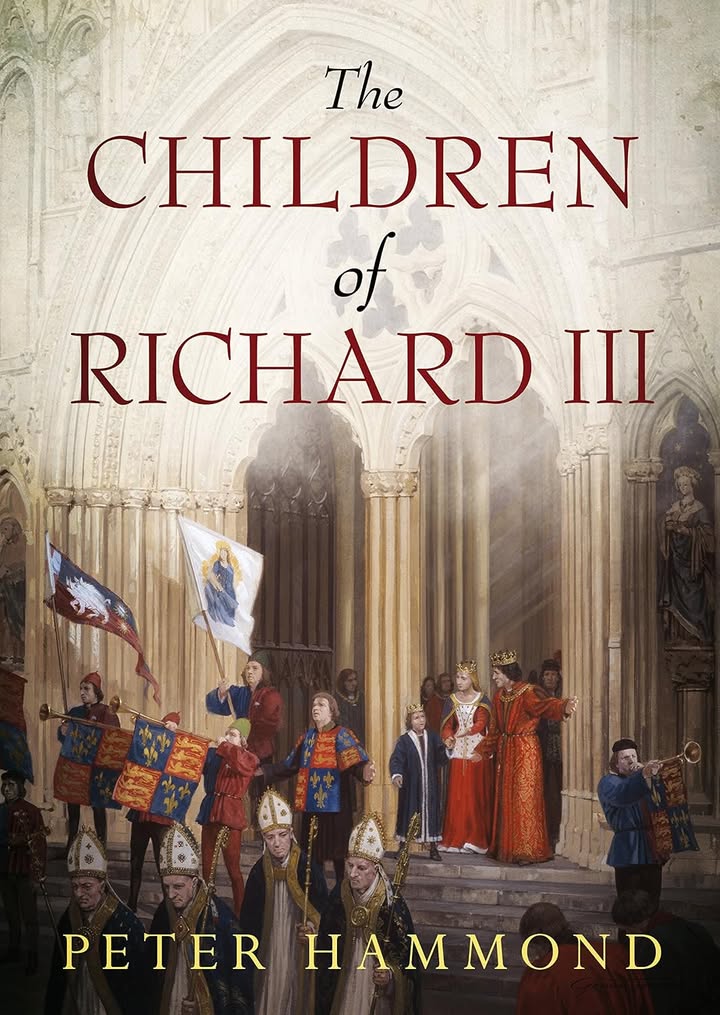
It was with great sadness that we learned late last week of the death of Peter Hammond, one of the great Ricardian historians of our times. For many decades, Peter (along with his wife Caroline) was the backbone of Ricardian events held up and down the country, and his scholarly works include some of the most respected works on Richard III, some written alongside Anne Sutton: The Road to Bosworth Field, The Children of Richard III, The Coronation of Richard III, and as an editor for volumes of essays such as 'Richard III: Lordship, Loyalty and Law'. A stalwart of Richard III Society events, especially manning the book sales latterly, Peter had also served as Research Officer for many years, and held the office of President and Vice-President. He will be much missed and our thoughts, prayers and condolences go to his wife Caroline, who is also unwell in hospital, with our best wishes for her recovery.
40 members and guests came along on Monday to hear our Membership Officer Bridget give a detailed talk on ‘Piel Island and the June 1487 invasion of Edward V's army’, enhanced throughout by helpful maps and delightful photos from a recent trip to the island taken with the South Cumbria Richard III group.
Tiny Piel Island – just 26 acres - lying half a mile off the Furness Peninsular close to Barrow-in-Furness, was historically part of Lancashire. An earlier name was the ‘Piel of Foudray’, (old Norse ‘fouder’ meaning fodder and ‘ay’ meaning island). In 1127 it was granted by King Stephen to the Cistercian monks at Furness Abbey to warehouse grain, wool and wine, and became fortified with its ‘peel’ fortress, to repel pirates and raiders. Later rebuilt in stone in the early C14th, when Robert the Bruce was raiding the area, the island formed a safe supply base, even for smuggling, with the monks implicated in at least one attempt to avoid customs duties. Possibly Piel’s most significant historical moment came in June 1487 when Edward V’s Yorkist army landed here from Ireland. Owned by the Crown post-Dissolution, its harbour became a base for Parliamentarians during the Civil War and by 1662 Charles II had given the Lordship of Furness to the Duke of Albemarle, and by the C19th the Duke of Buccleugh was landlord until the island was gifted to the town of Barrow as a memorial to those killed in the Great War. Today Piel is owned and maintained by English Heritage but with no entry fee. Traditionally, the landlord of the Ship Inn there is known as the King of Piel.
After Bosworth, it is thought Francis Lord Lovell may have hidden in the Furness area with Sir Thomas Broughton before heading to Flanders with the Earl of Lincoln, and then Ireland. Backed by Margaret Duchess of Burgundy, an army sailed from Ireland to Piel, led by Edward V, eldest son of Edward IV, who may have been brought to Ireland by Sir Henry Bodrugan of Cornwall (also owner of Coldridge Manor in Devon…) Recently discovered documentation on the continent describes the army – “...to serve [Margaret’s] nephew – son of King Edward, (late her brother)… who was expelled from his dominion...’ - which can only mean Edward V. He had been crowned in Dublin on 27th May 1487 and the Earl of Lincoln (Richard III’s named heir) attended the coronation of the only noble who could outrank him for the throne.
The army of Martin Schwartz Swiss/German mercenaries, ‘landsknechts’, combined with 4,500 Irish kerns brought by the Fitzgerald Earls of Kildare. They made landfall at Piel on 4th June, or more likely at Foulney, a sandy promontory attached to the mainland, from which they could march cross-country towards York, then south to engage with Henry Tudor’s forces. En route, they may have passed Gleaston castle, likely unoccupied but owned by Cecily Bonville Harrington, wife of Thomas Grey, Marquess of Dorset (Edward V’s half-brother). Local-born priest Christopher Urswick (Margaret Beaufort’s confessor and the King’s almoner) was sent North to repress aid being supplied by Furness Abbey where Urswick’s father was a lay-brother.
With forces enjoined by Sir Thomas Broughton and Henry Huddleston, it is likely the army followed the old Cistercian Way, assisted by the Augustinian monks at Conishead Priory before being guided across the Leven estuary sands towards Cartmel Priory, a well-known route at low tide. Heading east, the army may have passed eastwards Arnside Tower, owned by Yorkist supporters, the Middletons, and northwards, assistance from Sir Thomas Strickland of Sizergh Castle, or the Harringtons’ uncle, Sir Thomas Pilkington. Various routes via Killington, or Kirkby Lonsdale, brought the rebels to Sedbergh and into Wensleydale, picking up Scropes and Metcalfes in support and reaching Masham in just four days on 8th June, from where Edward V sent a letter to York. After a victorious skirmish at Tadcaster against Lord Clifford and another clash in Sherwood Forest with Sir Edward Woodville, the army of c.8,000 eventually reached East Stoke, gathering on high ground to engage Henry VII’s forces.
Henry’s forces arrived better armed and equipped, against Martin Schwartz’s well-trained mercenaries but also Irish kerns with makeshift weapons and no proper armour. On 16th June, slower European crossbows were outperformed by English longbows, and after three hours, the Yorkist forces were overpowered and pursued into a ditch, later called ‘red gutter’ for the slaughter there. The Earl of Lincoln and Martin Schwartz died but Francis Lovell vanished, supposedly never to be seen again. A young boy, whom Henry dubbed Lambert Simnel, was paraded at the battlefield and pronounced to be the imposter figurehead of the rebels but what happened to the real leader is unknown. Was Edward V killed, injured or did he escape? Bridget argued it was strange that Henry treated his captive Lambert Simnel with lenience, yet ten years later, faced with an army led by so-called ‘Perkin Warbeck’, he detained him and later executed him. Bridget then took us through some of the theories about Coldridge Manor and one John Evans, parker; of the unique stained-glass image of Edward V in this tiny and remarkably remote Devonshire hamlet. Yorkist roses and Sunnes in Splendour abound in the church’s decorated screen and ceiling, and Richard III is known to have sent Robert Markenfield of Markenfield Hall, near Ripon, to Coldridge on an undisclosed mission!
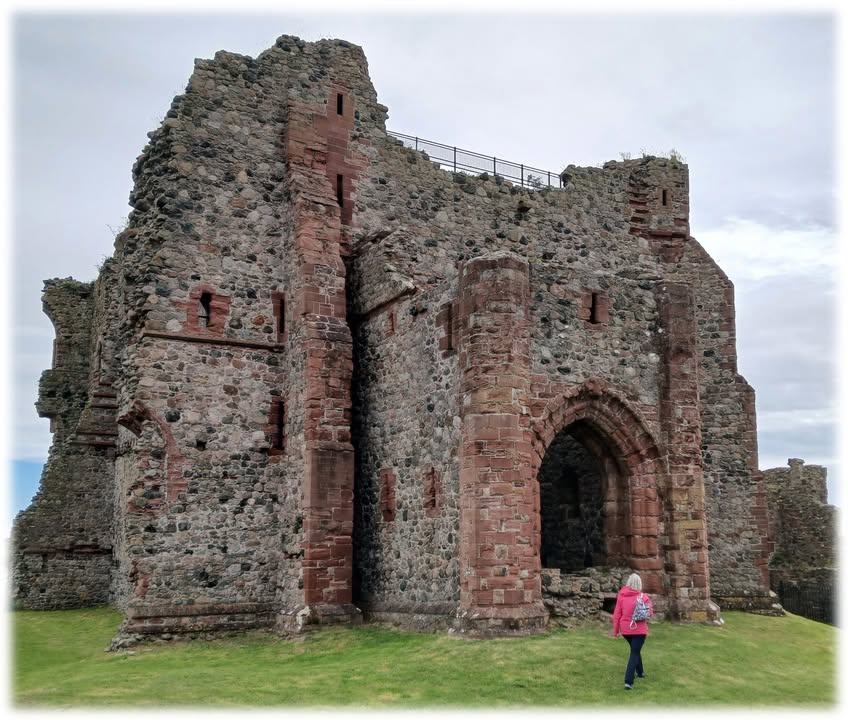
Bridget visited Piel Castle in 2024 with the South Cumbria Richard III Group, catching the 10-minute ferry from Roa Island’s jetty on Foulney. Much eroded by the sea, the thick red sandstone and flint castle has inner and outer moats, a ruined keep, gatehouse, chapel and guard towers. In August 2026, a stunning replica C15th ship, the Santa Maria, docked at Barrow, revealing how Edward V’s 1487 invasion fleet might have looked. Today Piel Island houses the Ship Inn, fishermen’s cottages, a camp site [tents only] and the ruins of the castle. The Piel Island ferry , which also offers seal and bird-watching trips, runs daily 11am-4.30pm from Roa Island jetty, Easter to September, weather permitting. Bridget also mentioned that in her Ricardian novel, ‘Cleave to the Crown’, she included the story of Edward V and Stoke Field and explored current theories of the Princes’ survival in her Author’s Conclusion.
Our November meeting is on Monday 16th, when Kim Harding will give a talk on ‘Yorkist & other poems of the late C15th’ and there will be a bumper Christmas raffle. All welcome; guests £3.
Pic: Piel Castle
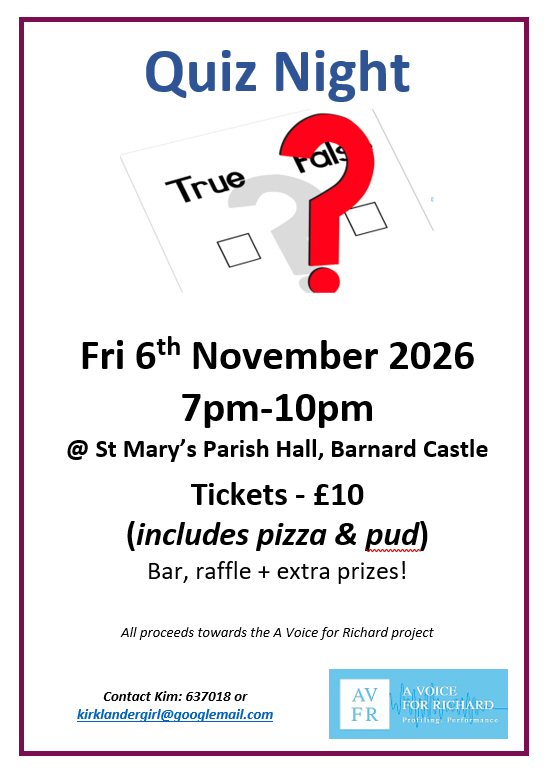
Tickets are now on sale for our autumn Quiz & Pizza evening - Friday 6th November - when Quizmeister Adrienne will be challenging our general knowledge and some incredible raffle prizes will be on offer, including tickets for Raby Castle, Bolton Castle, Kiplin Hall and Thorpe Perrow and some great hampers of treats. Proceeds are going to The Voice For Richard project, to enable the recording by Thomas Dennis of Latin audio versions of two speeches made by Richard.
Come along to feast on pizza and sides, and then homemade cakes; not forgetting a licensed bar, and Adrienne's Heads-or-Tails prize-winner. Teams of no more than 7.
Tickets £10 available from Kim Harding.
>>Return to Home Page